



A Weekend with Sam Roberts Band
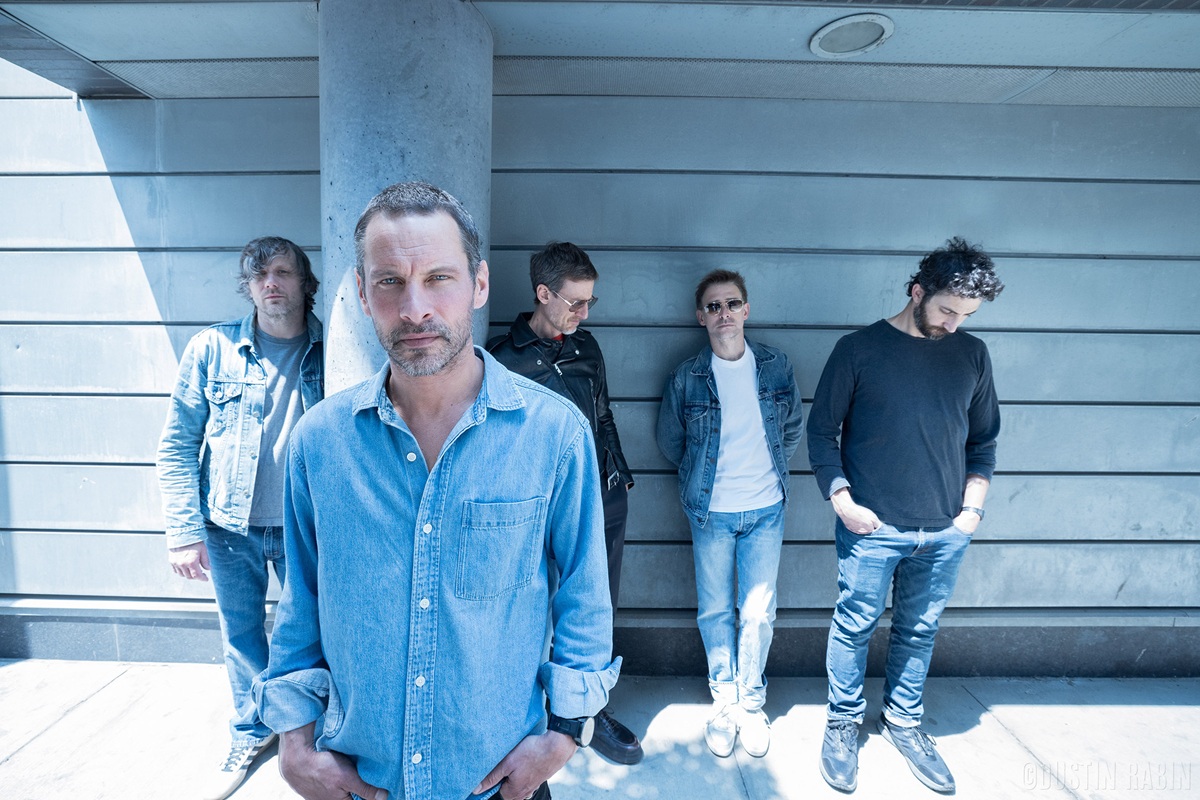
Sam Roberts Band. Photo by Dustin Rabin


Beloved Canadian rock band Sam Roberts Band has not one, but two shows in Calgary this weekend, both guaranteed to be high-energy performances with great guitar riffs, infectiously anthemic earworms, highly memorable pop-inspired hooks, and upbeat, danceable rhythms.
Ahead of Sam Roberts Band’s upcoming show at Spruce Meadows on June 19th and Parkland Summerfest on June 20th, WHERE Calgary chatted with frontman Sam Roberts.
“[Calgary] is just a city we have a long history with and a deep connection with, especially in the summertime,” Roberts states. “This year, as the fates would have it, we have two shows and two just seemed better than one. Also, [these are] new venues for us as well… Going to a new venue always seems to spark a different interaction with the crowd, so looking forward to breaking that open.”
For the Spruce Meadows show, Reuben Bullock is the opener, and Sam Roberts Band is the main act. Meanwhile, Sam Roberts Band is the headliner for Parkland Summerfest with Odds (the opening band), Jade Elephant (the house band), and Dino Martins (the party band) also playing. Previously, Sam Roberts Band has crossed paths with Odds, but it will be their first time meeting the other bands. “We are always looking for new connections, and I don’t mean connections in a business world sense,” Roberts says. “I mean meeting new musicians, feeding off what they do on stage, and adding new blood into our ecosystem as a band, so we don’t feel like we are walking the same ground all the time, and a big part of that has to do with who you play with on stage. I’m looking forward to getting to know them and seeing what they do.”
Roberts is also really looking forward to exploring Calgary and hanging out with some family. “You always have your favourite spots that you go to, but at the same time you have to kind of force yourself to break into some uncharted territory,” he states. “You can see the Rocky Mountains out in the distance at certain vantage points, so that always makes me want to go out there and spend a little bit of time there… I have family out there [in Calgary] too, so I always enjoy going out and spending time with them.”
As for what audiences can expect to hear from Sam Roberts Band at these upcoming shows, it is possible the band will play more tunes from their second album, Chemical City, than usual, as the album is celebrating its 20th anniversary this year. Earlier this year, to celebrate the occasion, the band performed five shows in five Canadian cities, playing the album in its entirety. “We should play more of it because we rehearsed it and know how to play it now before it goes back to sleep as it did for so long,” Roberts says. “Many of those songs we literally had to resuscitate because they’ve been lying dormant for a couple of decades. Some we have never played live before. It was a learning experience for us as a band, but it's hard to kind of focus on one thing when there’s so much music that you want to play.”
Reflecting on what Chemical City means to him, Roberts says. “In this whole journey of refamiliarizing ourselves with it and rediscovering it, it kind of transports you back in time to, I guess, the world we were living in when that record came about. That includes it being our second full-length album that we were going to release on a record label, the associated pressures that came up with that whole moment, how we responded to that, and the fact that Chemical City is the response. In my mind, the importance of that record is that we established that we were going to do what came to us on a creative level and represent ourselves based on our own instincts and the music we wanted to make, and not necessarily churn up the same ground over and over again and reproduce the things that brought you success in the past. It was maybe a statement to our fans and to our record label, but I think most of all it was a statement to ourselves, just to stick with what your gut is telling you to do and be willing to fight for it, because we did have to fight for it. We didn’t just waltz with that record under our arms. It wasn’t welcomed with this big, wide embrace from the record label. We had to dig in our heels and make sure they understood this is what we thought the record sounded like. It was pivotal in that way, for lack of a better word. It kind of shaped the course that we’ve followed ever since then, which is again to rely on your own instincts.”
Recording Chemical City in Australia is a memory that really sticks out for Roberts. “We went to Australia and just lived a beautiful time and a beautiful place, and no doubt that had a lot to do with the music that came out of there,” he recalls. He cites two songs from the album that really stand out to him. “‘Uprising Down Under,’ which, with the name down under, was written right there in Australia on a beautiful summer night. ‘A Stone Would Cry Out’ is another song that just seemed to come out of nowhere. I wish I had more like that. I wish more songs sort of gave themselves over to me like that, but I’m sure that had to do in large part with the magic of the place that we found ourselves in.”
For these upcoming shows, people can also expect to hear Sam Roberts Band’s biggest hits. Fan favourites “Brother Down” and “Where Have All The Good People Gone?” always get a great crowd reaction, with audiences always singing along. These songs have become staples on Canadian rock radio, have had an enduring legacy, and are among the most iconic Canadian rock songs of the 2000s. Why exactly have people continued to connect to these songs? “If I could hone in on the truth of that, then I would be able to reproduce what made them successful,” Roberts shares. “‘Brother Down’ really is something that you can’t script because I approached writing that song the way I approached writing the other songs at that time. It was unexpected. It sort of stuck out from everything else that was on the radio, and sometimes that can work out to a song's disadvantage, but in this case, people latched onto it. It really was a sort of popular groundswell that kept the song growing in terms of its presence in the public eye… ‘Where Have All The Good People Gone’ was feeding off that same kind of energy, and a lot of that had to do with being a struggling musician who is trying to find their way in the world, but also into a career. You knew that it was in you, in your blood, and in your DNA to be a musician and to live for it, to suffer for it, and to hopefully triumph through it, but you don’t know how to get there, and you wait for these opportunities. I think a lot of the songs that come out of those moments are relatable or universal in their message because I think, regardless of what you do in your life, you are always trying to align the way that you live with your passions, and sometimes those things can feel like they’re running at cross purposes or it’s too wide a gap between them. I think those songs expressed just in a very direct way what I was feeling and how we were all living at the time.”
The incredibly groovy and snappy “Them Kids,” which Roberts describes as “very tongue-in-cheek,” is another crowd-pleaser at live shows. Reflecting on the lyrics, Roberts shares, “You’re sort of battling in the trenches as a rock and roll musician, and you just felt like pop music and hip-hop music, and I come from Montréal and [there’s] so much electronic music as well, and it's like, ‘Man, rock and roll is getting pushed down or pushed to the side, and we have to be champions of that. We’re keeping it alive, so to speak.’ It’s a call to arms for rock ‘n’ rollers, but yeah, we’re not the ones that saved it. It wasn’t going to die anyway.”
One of Roberts’ favourite songs to play live is “We’re All In This Together” because it's an anthem of togetherness. “That song, because of the nature of it, seems to fit into certain places in the setlist where not just the crowd but the band is ready for that moment where we really feel connected,” he shares. “We can’t play that song first, and we’ve tried to do that, but we haven’t really fully formed that communal experience and forgetting the boundaries between you and the person next to you in the audience or between the band and the audience. That takes a little while, oftentimes to get to that place. We’ve become very conscious of when we’ve arrived there and when it’s time to play that song, so it can bring people closer together and celebrate that. It feels like such a rare thing to do, so it’s always a really good feeling for us to spark that in the crowd in some way.”
In other news, Sam Roberts Band has been working hard on a new album. “Not this time, but maybe next time we come to Calgary, we’re gonna be coming through with a new record,” Roberts says. “[It’s] allowing yourself to be free and open to new things, new sounds, and new ways of just what a song is – can you play around with the structure of that as well? We’re always trying to push and pull the definition for our band anyway, of what that means. Every new record should be unafraid to go down those roads. The new songs to me still feel like they have a desperation and urgency to them because we are still pretty desperate and urgent in terms of recognizing we have this opportunity to go out and play music, say things, play shows, and live this very sort of visceral way of life. You want the songs you write in the studio to reflect that… We still have to dig in our heels all the time. When you write new songs and people want to hear the old ones, it’s like, ‘OK, we’ll play the old ones, but these ones, this is what we have to say right now.’ That sort of ‘sticking up for your kids’ thing never goes away in a band. It shouldn’t.”